Tag Archives: signaling

How does raising awareness stop prejudice?

Imagine you are in the habit of treating people who have lesser social status as if they are below you. One day you hear an advertisement talking about a group of people you know nothing about. It’s main thrust is that these people are as good as everyone else, or perhaps even special in some ways which the advertisement informs you are good, and that therefore you should respect them.

ANTaR informs us that Aboriginals do not get enough respect

ANTaR informs us that Aboriginals do not get enough respect

What do you infer?

  1. These people are totally normal except for being special in various exciting ways, and you should respect them.
  2. These people are so poorly respected by others that somebody feels the need to buy advertising to rectify the situation.

What about the next day when you hear that other employers are going to court for failing to employ these people enough?

I can’t think of any better way to stop people wanting to associate with someone than by suggesting to them that nobody else wants to. Low social status seems like the last thing you can solve by raising awareness.

Why do animal lovers want animals to feel pain?

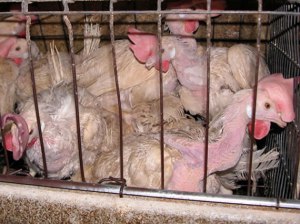
Behind the vail of (lots of) ignorance, would you rather squished chickens be painless?

Behind the vail of (lots of) ignorance, would you rather squished chickens be painless?

We may soon be able to make pain-free animals, according to New Scientist. The study they reported on finds that people not enthused by creating such creatures for scientific research, which is interesting. Robin Hanson guessed prior to seeing the article that this was because endorsing pain free animals would require thinking that farmed animals now were in more pain than wild animals, which people don’t think. However it turns out that vegetarians and animal welfare advocates were much more opposed to the idea than others in the study, so another explanation is needed.

Robert Wiblin suggested to me that vegetarians are mostly in favor of animals not being used, as well as not being hurt, so they don’t want to support pain-free use, as that is supporting use. He made this comparison:

Currently children are being sexually abused. The technology now exists to put them under anaesthetic so that they don’t experience the immediate pain of sexual abuse. Should we put children under anaesthetic to sexually abuse them?

A glance at the comments on other sites reporting the possibility of painless meat suggests vegetarians cite this along with a lot of different reasons for disapproval. And sure enough it seems mainly meat eaters who say eliminating pain would make them feel better about eating meat. The reasons vegetarians (and others) give for not liking the idea, or for not being more interested in pain-free meat, include:

  • The animals would harm themselves without knowing
  • Eating animals is bad for environmental or health reasons
  • Killing is always wrong
  • Animals have complex social lives and are sad when their family are killed, regardless of pain
  • Animals are living things [?!]
  • There are other forms of unpleasantness, such as psychological torture
  • How can we tell they don’t feel pain?
  • We will treat them worse if we think they can’t feel it, and we might be wrong
  • There are better solutions, such as not eating meat
  • It’s weird, freaky, disrespectful
  • It’s selfish and unnecessary for humans to do this to animals

Many reasonable reasons. The fascinating thing though is that vegetarians seem to consistently oppose the idea, yet not share reasons. Three (not mutually exclusive) explanations:

  1. Vegetarians care more about animals in general, so care about lots of related concerns.
  2. Once you have an opinion, you collect a multitude of reasons to have it. When I was a vegetarian I thought meat eating was bad for the environment, bad for people who need food, bad for me, maybe even bad for animals. This means when a group of people lose one reason to hold a shared belief they all have other reasons to put forward, but not necessarily the same ones.
  3. There’s some single reason vegetarians are especially motivated to oppose pain-free meat, so they each look for a reason to oppose it, and come across different ones, as there are many.

I’m interested by 3 because the situation reminds me of a pattern in similar cases I have noticed before. It goes like this. Some people make personal sacrifices, supposedly toward solving problems that don’t threaten them personally. They sort recycling, buy free range eggs, buy fair trade, campaign for wealth redistribution etc. Their actions are seen as virtuous. They see those who don’t join them as uncaring and immoral. A more efficient solution to the problem is suggested. It does not require personal sacrifice. People who have not previously sacrificed support it. Those who have previously sacrificed object on grounds that it is an excuse for people to get out of making the sacrifice.

The supposed instrumental action, as the visible sign of caring, has become virtuous in its own right. Solving the problem effectively is an attack on the moral people – an attempt to undermine their dream of a future where everybody longs to be very informed on the social and environmental effects of their consumption choices or to sort their recycling really well. Some examples of this sentiment:

  • A downside to recreating extinct species with cloning is that it will let people bother even less about stopping extinctions.
  • A recycling system where items are automatically and efficiently sorted at the plant rather than individually in homes would be worse because then people would be ignorant about the effort it takes to recycle.
  • Modern food systems lamentably make people lazy and ignorant of where their food comes from.
  • Making cars efficient just lets people be lazy and drive them more, rather than using real solutions like bikes.
  • The internet’s ready availability and general knowledge allows people to be ignorant and not bother learning facts.

In these cases, having solved a problem a better way should mean that efforts to solve it via personal sacrifice can be lessened. This would be a good thing if we wanted to solve the problem, and didn’t want to sacrifice. We would rejoice at progress allowing ever more ignorance and laziness on a given issue. But often we instead regret the end of an opportunity to show compassion and commitment. Especially when we were the compassionate, committed ones.

Is vegetarian opposition to preventing animal pain an example of this kind of motivation? Vegetarianism is a big personal effort, a moral issue, a cause of feelings of moral superiority, and a feature of identity which binds people together. It looks like other issues where people readily claim fear of an end to virtuous efforts.  How should we distinguish between this and the other explanations?

Charitable explanation

Is anyone really altruistic? The usual cynical explanations for seemingly altruistic behavior are that it makes one feel good, it makes one look good, and it brings other rewards later. These factors are usually present, but how much do they contribute to motivation?

One way to tell if it’s all about altruism is to invite charity that explicitly won’t benefit anyone. Curious economists asked their guinea pigs for donations to a variety of causes, warning them:

“The amount contributed by the proctor to your selected charity WILL be reduced by however much you pass to your selected charity. Your selected charity will receive neither more nor less than $10.”

Many participants chipped in nonetheless:

We find that participants, on average, donated 20% of their endowments and that approximately 57% of the participants made a donation.

This is compared to giving an average of 30-49% in experiments where donating benefited the cause, but it is of course possible that knowing you are helping offers more of a warm glow. It looks like at least half of giving isn’t altruistic at all, unless the participants were interested in the wellbeing of the experimenters’ funds.

The opportunity to be observed by others also influences how much we donate, and we are duly rewarded with reputation:

Here we demonstrate that more subjects were willing to give assistance to unfamiliar people in need if they could make their charity offers in the presence of their group mates than in a situation where the offers remained concealed from others. In return, those who were willing to participate in a particular charitable activity received significantly higher scores than others on scales measuring sympathy and trustworthiness.

This doesn’t tell us whether real altruism exists though. Maybe there are just a few truly altruistic deeds out there? What would a credibly altruistic act look like?

Fortunately for cute children desirous of socially admirable help, much charity is not driven by altruism (picture: Laura Lartigue)

Fortunately for cute children desirous of socially admirable help, much charity is not driven by altruism (picture: Laura Lartigue)

If an act made the doer feel bad, look bad to others, and endure material cost, while helping someone else, we would probably be satisfied that it was altruistic. For instance if a person killed their much loved grandmother to steal her money to donate to a charity they believed would increase the birth rate somewhere far away, at much risk to themselves, it would seem to escape the usual criticisms. And there is no way you would want to be friends with them.

So why would anyone tell you if they had good evidence they had been altruistic? The more credible evidence should look particularly bad. And if they were keen to tell you about it anyway, you would have to wonder whether it was for show after all. This makes it hard for an altruist to credibly inform anyone that they were altruistic. On the other hand the non-altruistic should be looking for any excuse to publicize their good deeds. This means the good deeds you hear about should be very biased toward the non-altruistic. Even if altruism were all over the place it should be hard to find. But it’s not, is it?

Value for money kills?

Indonesian SODIS users (picture: SODIS Eawag)

Indonesian SODIS users (picture: SODIS Eawag)

SODIS is a cheap method of disinfecting water by putting it in the sun. Like many things, it works better in physics than society, where its effects were not significant, according to a study in PLoS medicine recently. The technical barrier is that people don’t do it much. About thirty two percent of participants in the study used the system on a given day. If you’re familiar with how little things work in reality, this is still surprising. Cheaply disinfecting water seems like it would be a hit with poor people whose children get diarrhea all the time and regularly die. Rural Bolivia, where the study was done, is a good candidate. The children studied usually get diarrhoea four times a year, which causes about fifteen percent of deaths of children under five. For the poorest quintile in Bolivia the under five death rate is about one in ten of those born alive.

The leader of the study, Daniel Mausezahl, suspects a big reason for this is that lining up water bottles on your roof shows your neighbors that you aren’t rich enough to have more expensive methods of disinfecting water. It’s hard to see from a distance the difference between chlorination and coliform-infested jerry cans, so drinking excrement can make you look better than drinking cheap clean water.

Fascinating as signaling explanations are, this seems incredible. Having live descendents is even more evolutionarily handy than impressing associates. What other explanations could there be? Perhaps adults are skeptical about effectiveness? There is apparently good evidence it works though, and there were intensive promotional campaigns during the study. What’s more, lack of evidence doesn’t usually stop humans investing in just about anything that isn’t obviously lethal in the absence of effective means to control their wellbeing. And parents are known for obsessive interest in their children’s safety. What’s going on?